Bathroom remodeling costs in New Jersey range from $4,000 for a simple powder room refresh to $40,000+ for a luxury master bathroom transformation. All County Renovations, serving New Jersey homeowners since 2008, provides detailed project planning so clients receive accurate estimates tailored to their specific renovation scope and material selections.
Key Takeaways
- Bathroom remodeling costs in New Jersey range from $4,000 for a simple powder room refresh to $40,000 or more for a luxury master bathroom transformation.
- Four primary factors shape average bathroom remodel expenses: bathroom size, finish level, project scope, and required services.
- Finish level spans from budget-friendly stock materials to custom luxury selections, acting as the primary lever homeowners control.
- Scope decisions create the widest cost gaps, with a cosmetic update costing far less than a full gut renovation that moves plumbing and electrical.
What Drives Bathroom Remodel Costs in New Jersey?
Four primary factors shape average bathroom remodel expenses NJ homeowners encounter. Bathroom size, finish level, project scope, and required services each pull the final budget in a different direction. A homeowner who understands these levers avoids costly surprises.
How does bathroom size affect the remodeling budget?
Size matters because it dictates material quantities and labor hours. The number of fixtures and the room’s total square footage determine the scale of work. A powder room with a single vanity and toilet costs far less than a master bath with a double vanity, soaking tub, and separate shower. More fixtures mean more plumbing, more tile, and more installation time.
What is the difference between budget and luxury finish levels?
Finish level spans from basic stock materials to custom luxury selections. This category covers every visible surface: tile, countertops, vanities, lighting, and plumbing fixtures. A homeowner choosing porcelain tile and a prefabricated vanity spends differently than one selecting natural stone and custom cabinetry. Sweeten’s 2025 cost analysis for New Jersey confirms that finish level ranges from budget to luxury across all materials, fixtures, and finishes in a renovation.
Why does project scope change the price so dramatically?
Scope separates a surface-level refresh from a structural transformation. Replacing fixtures and finishes without moving walls keeps costs predictable. Changing the floor plan, relocating plumbing, or adding square footage introduces framing, electrical, and permit expenses. A full gut renovation with utility moves costs substantially more than a cosmetic update. The scope decision alone often doubles or triples the project budget.
Do design and architecture services add to the total?
Services extend beyond construction labor. Some projects need only a skilled contractor to execute a straightforward replacement. Others require professional design plans, architectural drawings, or structural engineering. All County Renovations works directly with homeowners to plan renovations, which helps clients determine whether additional design services fit their project. Each added service layer increases the investment but also reduces the risk of costly mid-project changes.
What Is the Average Bathroom Remodel Cost in NJ?
Bathroom remodeling costs in New Jersey span a wide spectrum. A simple powder room refresh starts around $4,000, while a luxury master bathroom transformation reaches $40,000 or more. The Powder Room Guys’ 2026 pricing guide confirms this range, drawn from hundreds of completed projects across the state. Homeowners across Bergen, Morris, Essex, Union, Passaic, and Somerset counties consistently ask about cost first. That broad range alone does little to help a homeowner budget for a specific project.
A full bathroom remodel in communities like Wyckoff reflects the labor rates and material preferences common in northern New Jersey. Mudosikitchenandbath.com’s 2025 report details that figure, reflecting the labor rates and material preferences common in northern New Jersey. The final number depends on square footage, fixture count, and finish level.
Average Bathroom Remodel Expenses NJ shift dramatically with project scope. A cosmetic update costs far less than a gut renovation that moves plumbing and electrical. Homeowners who skip the detailed planning phase risk budget overruns that strain the entire project.
What drives the cost difference between a powder room and a master bath?
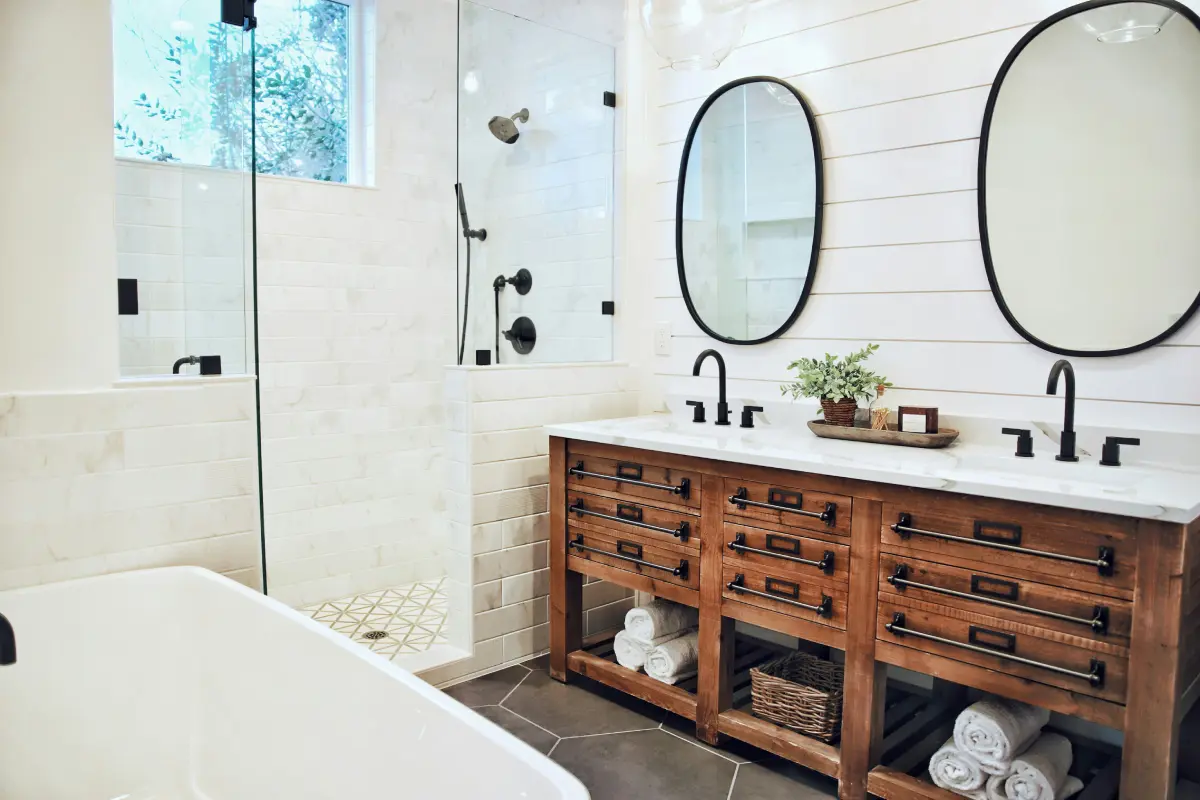
Square footage and fixture count create the largest cost gaps. A powder room needs only a vanity and toilet. A master bath adds a shower, tub, double vanity, and often custom tile work. Material grades widen the spread further. Budget-friendly porcelain tile keeps costs low. Natural stone, heated floors, and frameless glass enclosures push the total toward the upper end of that $40,000 range.
How do New Jersey labor rates affect the final price?
Skilled trades in northern New Jersey command premium wages. Electricians, plumbers, and tile setters in counties like Bergen and Morris charge rates that exceed national averages. Permitting requirements add another layer of cost. Municipalities enforce strict building codes, and inspections take time. All County Renovations, a family-owned contractor based in Springfield, has served New Jersey homeowners since 2008. The company navigates local permitting and coordinates licensed trades to keep projects on schedule.
How Do Budget Tiers Change Your Renovation?
Budget tiers determine the scope, materials, and overall experience of a New Jersey bathroom renovation. The average bathroom remodel expenses NJ homeowners face span from $4,000 for a simple powder room refresh to over $40,000 for a luxury master bathroom transformation, according to The Powder Room Guys’ 2026 pricing guide. Without a clear tier, homeowners risk overspending on finishes that do not match the home’s value or underinvesting in spaces that demand durability.
Finish level acts as the primary lever homeowners control. Sweeten’s 2025 cost analysis identifies a spectrum from budget to luxury across all materials, fixtures, and finishes. Budget-tier projects use stock vanities, standard porcelain tile, and chrome fixtures. Mid-range renovations introduce semi-custom cabinetry, porcelain or natural stone tile, and upgraded lighting packages. Luxury transformations feature custom-built vanities, imported tile, heated flooring, and designer plumbing fixtures.
What Drives the Biggest Cost Differences Between Tiers?
Scope decisions create the widest cost gaps. A cosmetic update that replaces fixtures and finishes without altering the floor plan costs far less than a full gut renovation. Sweeten’s data confirms that moving walls and relocating plumbing or electrical utilities multiplies the project cost. Structural changes require permits, rough-in work, and additional labor days.
All County Renovations works directly with homeowners to plan projects that align budget tiers with realistic scope. The company’s detailed project execution ensures that material selections and layout decisions stay coordinated from design through completion. Homeowners who define their tier early avoid the common pitfall of mid-project upgrades that strain finances and extend timelines.
How Do Material Choices Shift Across Tiers?
Material quality escalates sharply between tiers. Budget renovations rely on builder-grade products with limited color and style options. Mid-range projects open access to interior renovations materials like solid-surface countertops and porcelain tile that mimics natural stone. Luxury tiers incorporate quartz or marble countertops, custom glass enclosures, and high-end plumbing brands with lifetime warranties. Each step up improves longevity and aesthetic precision but adds 30 to 50 percent to the material line item.
Where Do Hidden Costs and Permits Add Up?
Bathroom renovation budgets in New Jersey rarely stop at tile and fixtures. A comprehensive New Jersey pricing guide reveals that significant expenses hide beneath the surface, from unplanned structural repairs to municipal permit fees. Homeowners who overlook these line items risk project delays and budget overruns that damage even the most carefully planned remodel.
What Services Beyond Construction Drive Up Costs?
Professional design and architecture work form a distinct cost category separate from construction labor. Planning a layout change or moving plumbing requires stamped drawings in many New Jersey municipalities. These Average Bathroom Remodel Expenses NJ climb further when engineers assess load-bearing walls or when an interior designer specifies custom finishes. Homeowners should budget for professional services before the first hammer swings.
Why Do Permits Matter for New Jersey Bathroom Remodels?
Permit costs vary by township, but skipping them creates serious liability. Electrical, plumbing, and structural changes all trigger permit requirements across Northern New Jersey communities, including Summit, Chatham, and Short Hills. Working without permits risks failed inspections, fines, and disclosure problems when selling the home. Local contractors navigate these rules routinely. All County Renovations, a locally rooted New Jersey remodeling contractor, manages permitting as part of its detailed project execution. The company serves Springfield and surrounding areas with personalized renovation solutions that account for municipal requirements.
Where Else Do Costs Hide During Renovation?
Water damage discovered behind old tile adds thousands in unexpected remediation. Outdated wiring or undersized vent stacks often surface only after demolition starts. These hidden conditions demand immediate resolution and inflate Average Bathroom Remodel Expenses NJ beyond initial estimates. Working with a contractor known for quality craftsmanship and attention to detail helps homeowners anticipate these risks. All County Renovations provides reliable service and personalized home renovation solutions that address surprises methodically rather than reactively.
Is a Bathroom Remodel Worth the Investment?
A bathroom remodel in New Jersey delivers strong financial and practical returns. A full bathroom remodel reflects the labor rates and material preferences common in northern New Jersey. That investment translates into daily comfort and long-term property value.
Delaying necessary updates carries hidden costs. Outdated plumbing and poor ventilation cause moisture damage that spreads behind walls. What starts as a cosmetic refresh becomes structural repair. The expense grows while the bathroom remains unusable.
All County Renovations works directly with homeowners to create renovation solutions designed for their specific needs. The company combines personalized service with experienced craftsmanship across a wide range of residential remodeling projects. Family-owned and locally operated since 2008, the team understands New Jersey homes and the challenges they face.
What factors determine the return on a bathroom remodel?
Quality of materials and installation drives long-term value. A well-executed renovation with durable fixtures and proper waterproofing lasts decades. Cutting corners on labor or finishes leads to premature wear and costly fixes.
Market expectations also play a role. Buyers in Northern New Jersey notice outdated bathrooms immediately. A modern, functional space helps a home compete. Even for homeowners staying put, the daily benefit of a well-designed bathroom justifies the expense.
How do New Jersey homeowners avoid budget surprises?
Knowing the real costs in a specific New Jersey town helps homeowners make realistic plans and prevent spending surprises. Researching local project ranges before meeting with contractors sets a practical baseline. All County Renovations provides transparent planning that keeps projects on track from the first consultation through final walkthrough.
FAQ
What is the average bathroom remodel cost in New Jersey?
Bathroom remodeling costs in New Jersey range from $4,000 for a simple powder room refresh to $40,000 or more for a luxury master bathroom transformation.
What factors drive bathroom remodel costs in New Jersey?
Four primary factors shape costs: bathroom size, finish level, project scope, and required services. Scope decisions create the widest cost gaps, with a cosmetic update costing far less than a full gut renovation.
How does finish level affect the bathroom remodel budget?
Finish level spans from budget-friendly stock materials to custom luxury selections.
Conclusion
Knowing the real costs in your specific New Jersey town helps you make realistic plans and prevent spending surprises. Researching local project ranges before meeting with contractors sets a practical baseline, and detailed written estimates that account for labor, materials, and potential structural issues eliminate ambiguity.