
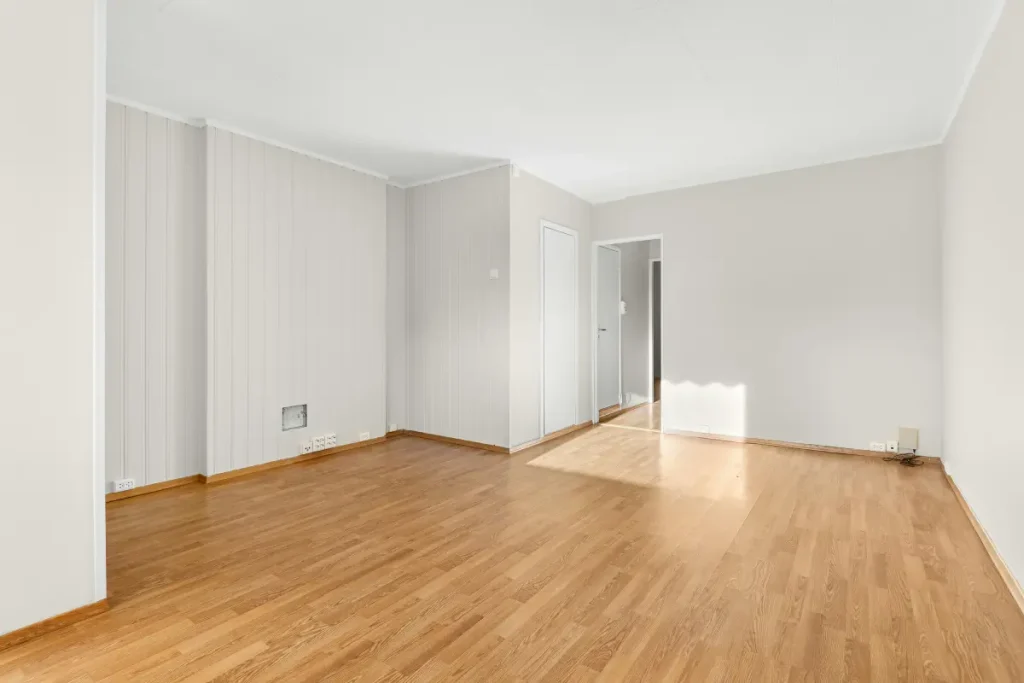
Hardwood flooring installation in New Jersey typically costs $814 to $1,072 for 129 square feet of red oak, plus basic labor adding an identical $814 to $1,072. Total pricing varies by wood species, finish, and project size. All County Renovations, serving New Jersey since 2008, provides professional installation with quality craftsmanship for lasting results.
Key Takeaways
- Hardwood flooring installation in New Jersey costs $814 to $1,072 for 129 square feet of red oak, plus identical basic labor.
- Material grade, labor rates, and subfloor preparation form the three largest cost drivers for New Jersey homeowners.
- New Jersey’s weather patterns create moisture challenges that make engineered hardwood an increasingly common specification.
- Subfloor condition directly drives preparation expense, with older homes frequently needing leveling or replacement before installation.
What drives hardwood flooring installation costs in New Jersey?
Material grade, labor rates, and subfloor preparation form the three largest cost drivers for hardwood flooring installation New Jersey homeowners encounter. A 129-square-foot project illustrates the range clearly. Homewyse data shows material costs for red oak flooring running from $814 to $1,072, with basic installation labor adding an identical $814 to $1,072 for the same area.
Why do labor costs vary so much between projects?
Site conditions dictate the final labor figure. A perfectly level subfloor requires less preparation time than one with water damage or uneven joists. Complex room layouts with multiple angles, stairs, or transitions between flooring types also increase installation hours. The Homewyse estimate assumes favorable site conditions. Any deviation from that baseline pushes costs toward the higher end of the range.
How does New Jersey’s climate affect flooring material choices?
New Jersey’s weather patterns create specific challenges for hardwood. Heavy rain, seasonal snowmelt, and high groundwater levels introduce moisture that solid wood absorbs and releases through the year. This expansion and contraction cycle makes engineered hardwood an increasingly common specification. Engineered planks resist humidity swings better than solid 3/4-inch boards, reducing the risk of cupping or gapping after installation. Homeowners who overlook these climate factors often face costly repairs within the first two heating seasons.
All County Renovations addresses these variables through direct client collaboration. The company’s flooring services include material selection guidance that accounts for each home’s specific moisture exposure and subfloor condition. Hardwood floors add warmth, value, and timeless beauty to any New Jersey home. Achieving that result depends on matching the right material and installation method to the site’s real conditions, not just the showroom sample.
How do material grades affect your total budget?
Hardwood flooring grades directly shape both material cost and long-term performance. Higher grades deliver cleaner, more uniform boards at a premium, while lower grades trade visual consistency for savings and character.
Material grade selection determines how much of the raw footage a homeowner actually keeps. Clear-grade flooring eliminates nearly all knots and color variation, producing that flawless, furniture-grade surface. Select-grade allows small, scattered imperfections and modest color shifts, sitting in the middle on price. Common-grade boards, meanwhile, arrive with pronounced grain patterns, knot clusters, and richer color range. A New Jersey homeowner choosing common-grade red oak saves on material versus clear-grade. The final look tells a very different story.
Which grade holds up best in New Jersey’s climate?
Solid hardwood measuring 3/4 inch thick, a standard for premium installations, offers lifetime durability when properly maintained. The grade itself does not alter structural integrity. A common-grade oak board resists seasonal humidity changes just as well as its clear-grade counterpart. The real difference lies in appearance over decades. Wider color variation in lower grades masks minor wear and sun-fading better than uniform clear-grade surfaces.
Engineered wide-plank options shift the budget conversation toward format rather than grade. Wider planks demand higher-grade material to maintain visual consistency across each board. Narrower strips hide variation more naturally. New Jersey homeowners who prefer wide-plank looks should budget for select-grade or better to avoid mismatched boards disrupting sightlines in open-concept layouts.
Does stain selection affect grade requirements?
Color choice often determines which grade makes sense. Dark stains conceal knots and grain variation, allowing a common-grade material to perform beautifully at a lower price. Light or natural finishes, by contrast, expose every characteristic. A homeowner selecting from a broad stain palette might pair a deep espresso with common-grade red oak and cut material costs substantially. That same homeowner choosing a clear natural finish needs select-grade at minimum.
What labor and preparation costs should you expect?
Labor for hardwood flooring installation covers far more than nailing down planks. The process begins with installing underlayment on a clean, level subfloor. Certified installers then acclimate, cull, and blend the wood flooring before blind nailing it into place, a meticulous sequence that prevents gaps and warping later.
New Jersey homeowners face specific preparation demands that influence total project cost. Older homes common across the state frequently need subfloor leveling or replacement before new flooring goes down. Skipping this step causes uneven wear and squeaking within months, not years.
What does professional installation planning include?
Planning and preparation represent a significant portion of labor costs. Work includes equipment and material acquisition, area preparation and protection, setup, and cleanup. Certified installers in New Jersey ensure a perfect fit, level finish, and long-lasting results by managing every phase from delivery to final walkthrough.
How does floor preparation affect the final price?
Subfloor condition directly drives preparation expense. The basic labor estimate assumes favorable site conditions with an already level surface. When installers encounter wavy subfloors, moisture damage, or structural issues, additional leveling and repair work becomes necessary before any hardwood touches the ground. This work demands extra materials and hours, pushing costs beyond standard estimates. The expertise of a professional Hardwood Flooring Installation New Jersey contractor proves essential here. Shortcuts during preparation guarantee premature floor failure.
How to choose the right hardwood for your New Jersey home?
Selecting hardwood flooring demands balancing aesthetic preferences with the practical demands of New Jersey’s climate. The right choice delivers decades of performance while enhancing a home’s architectural character. Homeowners who skip the evaluation of real-world conditions often face premature wear that shortens the floor’s lifespan considerably.
Hardwood Flooring Installation New Jersey projects succeed when material selection accounts for moisture, foot traffic, and style continuity. Hardwood enhances everything from traditional colonials to modern open-concept interiors, a versatility documented in Woodhaven Lumber’s January 2026 flooring guide. Understanding how different species and constructions perform under daily use helps homeowners avoid costly mismatches between appearance and durability.
Solid and engineered planks each serve distinct purposes. Solid hardwood, typically 3/4 inch thick, offers lifetime sanding potential. Engineered construction provides superior dimensional stability in basements and over radiant heat systems. Both options support a concealed fastener system that creates a clean, modern look without visible nail heads interrupting the surface pattern.
What hardwood species handle New Jersey humidity best?
Red oak and white oak remain the region’s workhorses. Red oak accepts stain evenly and resists everyday denting. White oak’s tighter grain structure makes it inherently more moisture-resistant, a meaningful advantage during New Jersey’s humid summers. Maple offers a lighter, contemporary palette but expands more noticeably with seasonal changes.
Should New Jersey homeowners choose prefinished or site-finished floors?
Prefinished planks arrive with factory-cured aluminum oxide coatings that resist UV fading and scuffs. Installation completes faster with no sanding dust. Site-finished floors allow custom stain matching to existing millwork and trim. Either approach pairs with installation services backed by a one-year workmanship warranty that provides peace of mind during the settling period.
The decision ultimately hinges on the room’s exposure to moisture and sunlight. A kitchen with south-facing windows benefits from a UV-resistant factory finish. A formal living room gains character from a custom-stained, site-finished floor that coordinates with surrounding wood elements throughout the space.
Why trust a local New Jersey contractor for your installation?
Local expertise protects a hardwood flooring investment from the start. New Jersey’s climate creates specific risks that out-of-state crews often miss.
What makes New Jersey’s climate different for hardwood floors?
Heavy rain, seasonal snowmelt, and high groundwater levels challenge flooring installations across the state. A contractor unfamiliar with these conditions may skip critical moisture mitigation steps. That oversight leads to cupping, warping, and premature replacement.
All County Renovations has provided high-quality remodeling services to New Jersey homeowners since 2008. The company’s longevity reflects consistent, reliable workmanship across hundreds of local projects.
How does a family-owned company approach installation differently?
A family-owned and operated business serving all of New Jersey brings accountability that franchise operations cannot match. Homeowners work directly with the company to design their renovations. Direct collaboration eliminates miscommunication and keeps the project aligned with the homeowner’s vision from demolition to final walkthrough.
The company’s about us page details a straightforward process: listen, explain options, and execute with precision. No subcontractor roulette. No corporate call centers. One team manages the entire hardwood flooring installation New Jersey project, understanding that local reputation depends on every single floor.
FAQ
What is the typical cost range for hardwood flooring installation in New Jersey?
$814 to $1,072 for 129 square feet of red oak, plus basic labor costs an identical $814 to $1,072.
How does New Jersey’s climate affect hardwood flooring choices?
New Jersey’s weather patterns create moisture challenges, making engineered hardwood an increasingly common specification to resist humidity swings.
What are the three largest cost drivers for hardwood flooring installation in New Jersey?
Material grade, labor rates, and subfloor preparation form the three largest cost drivers.
Conclusion
Understanding these cost drivers (material grade, labor rates, and subfloor preparation) gives New Jersey homeowners the clarity needed to budget realistically for a hardwood flooring installation. The decision to invest in professional preparation and local expertise protects that investment against the state’s demanding climate, ensuring the floor performs as expected for decades.