
Planning a kitchen renovation in Northern New Jersey? From historic pre-war homes in Summit to expansive modern properties in Short Hills and Westfield, understanding local labor rates, material tiers, and permit requirements is essential for building a realistic budget.
Understanding Kitchen Remodeling Costs in Northern New Jersey
Kitchen remodeling in Northern New Jersey commands a higher investment than national averages, largely due to local trade labor rates, municipal permitting standards, and regional material supply lines. While a national mid-range remodel averages around $40,000, homeowners in Essex, Union, and Morris counties typically see investments across three distinct project tiers:
- Minor / Cosmetic Refresh ($25,000 – $45,000): Preserves the existing floor plan. Includes cabinet refacing or repainting, updated quartz or granite countertops, new tile backsplash, upgraded sink/faucet fixtures, and new lighting.
- Major Mid-Range Renovation ($45,000 – $95,000): Replaces existing cabinetry with high-quality semi-custom units, introduces premium appliance suites, installs hardwood or porcelain tile flooring, and includes minor electrical and plumbing adjustments within the same footprint.
- Custom Luxury Overhaul ($95,000 – $180,000+): Involves full-gut demolition, structural alterations (such as load-bearing wall removal for open-concept layouts), fully custom cabinetry, top-tier luxury appliances (e.g., Wolf, Sub-Zero, Thermador), and complete utility rough-ins.
On average, expect baseline construction costs in Northern NJ to run between $175 and $350+ per square foot, depending on material selections and structural complexity.
High-ROI Upgrades That Deliver Long-Term Value
Not all renovation dollars yield the same return. When planning for both daily enjoyment and future resale equity, focus budget allocation on high-value items:
1. Semi-Custom & Custom Wood Cabinetry (30%–40% of Total Budget)
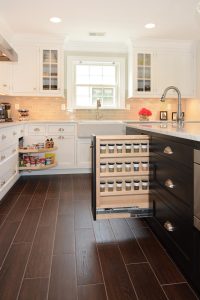
Cabinetry serves as the structural and aesthetic centerpiece of the kitchen. Investing in solid plywood box construction, dovetail drawers, soft-close hardware, and full-extension glides ensures durability. In high-demand markets like Chatham and Summit, custom storage solutions—such as integrated spice pull-outs, appliance garages, and deep pantry drawers—significantly boost buyer interest.
2. Quartz & Engineered Quartzite Countertops (10%–15% of Total Budget)
Non-porous engineered quartz (such as Cambria or Silestone) remains the top pick for North Jersey homeowners due to its stain resistance and low maintenance compared to natural marble. For luxury builds, natural quartzite offers natural stone veining with superior scratch resistance.
3. Multi-Functional Kitchen Islands & Open Layouts
Removing non-load-bearing or load-bearing partition walls to join the kitchen with formal dining or living rooms provides one of the highest returns on investment. A continuous island with seating, prep sinks, and hidden under-counter storage maximizes both function and social space.
Realistic Timelines for a High-End Kitchen Renovation
A professional kitchen remodel involves extensive coordination between designers, trade specialists, and municipal inspectors. A typical schedule breaks down into three core phases:
Phase 1: Architectural Design, Material Selection & Permits (4 to 8 Weeks)
Finalizing floor plans, ordering cabinetry (which often has a 6-to-10-week lead time), selecting appliances, and submitting architectural drawings to your local construction department for building, electrical, and plumbing permits.
Phase 2: Demolition, Framing & Utility Rough-Ins (2 to 3 Weeks)
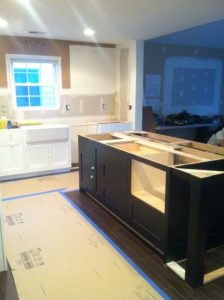
Stripping the space to studs, executing structural framing (e.g., placing steel or LVL beams), and completing plumbing, electrical, and HVAC rough-ins prior to sub-grade municipal inspections.
Phase 3: Cabinetry, Surfaces & Finishing Touches (3 to 5 Weeks)
Hanging drywall, setting flooring, installing cabinets, templating and setting stone countertops, tiling backsplashes, installing trim, and completing final fixture hookups and paint work.
How to Avoid Cost Overruns on Major Renovations
Older homes built before 1980 across Northern NJ frequently conceal outdated galvanized plumbing, knob-and-tube or ungrounded wiring, or subfloor moisture damage. Partnering with a single-source design-build general contractor streamlines accountability and keeps scope changes structured. Always set aside a 10% to 15% contingency reserve within your overall budget to absorb unforeseen structural or mechanical upgrades without delaying progress.
Frequently Asked Questions (FAQ)
How much value does a kitchen remodel add to a home in Northern NJ?
Major kitchen renovations in Essex, Union, and Morris counties consistently recoup between 65% and 78% of their initial cost at resale, while dramatically reducing time-on-market and attracting qualified buyers.
Do I need a permit to remodel a kitchen in Union or Essex County?
Yes. Any project involving structural modifications, layout shifts, moving plumbing lines, adding electrical circuits, or altering gas lines requires municipal permits and Uniform Construction Code (UCC) inspections.
Can I stay in my home during a full kitchen renovation?
Yes. Most homeowners remain living in their homes. Professional contractors erect dust-containment barriers and assist in establishing a functional temporary kitchenette area with basic appliances for the duration of construction.
Ready to transform your kitchen into a high-performing, beautiful centerpiece for your home? Contact All County Renovations at (908) 688-5025 or schedule your in-home design consultation online today.